

Our polyglyceryl-4 caprate is 100% natural from non-palm, plant sources. Can be used in place of peg-6 caprylic/capric glycerides and peg-7 glyceryl cocoate.
1
/
of
1
Polyglyceryl-4 Caprate - New
Polyglyceryl-4 Caprate - New
Polyglyceryl-4 Caprate is a natural conditioning agent and is used to penetrate the skin barrier. Used in combination with various ingredients it can be used to increase hydration and cause cosmetics to have more effective results. Polyglyceryl-4 caprate can also be used to stabilize fragrance in products. For instance, it can be used to include fragrance into our multi-use liquid soap base without having to shake before each use.
Chemically, polyglyceryl-4 caprate are polar or amphiphilic lipids. What this means is that polyglyceryl-4 caprate dissolves in both water and oil and work as an emulsifier to disperse all ingredients and stabilize a formula. Polyglyceryl-4 caprate is an incredibly versatile ingredient.
In skin care products, polyglyceryl-4 caprate also works to decrease evaporation which locks in moisture.
Polyglyceryl-4 caprate is the ester of fatty acid capric acid and glycerin-derived polyglycerin-4. It belongs to the polyglyceryl fatty acid esters family, a category of naturally or synthetically derived ingredients used both in food and cosmetics, where they work as surfactants, emulsifiers and skin-conditioners. It is often used in combination with other polyglyceryl esters.
Safety in cosmetic applications
The Cosmetic Ingredient Review Expert Panel (CIR) reviewed polyglyceryl-4 caprate, in 2023 and concluded it is safe in cosmetics in the current practices of use and concentrations and when formulated to be non-irritating. Polyglyceryl-4 caprate is safe at concentrations up to 1.5% in leave-on and rinse-off products. General usage is between .5% - 1.5%. The Panel cautioned that care should be taken in formulating cosmetic products that may contain these ingredients in combination with any ingredients whose safety was based on their lack of dermal absorption data, or when dermal absorption was a concern.The Panel noted that droplets/particles from spray cosmetic products would not
be respirable to any appreciable amount. Furthermore, droplets/particles deposited in the nasopharyngeal or bronchial regions of the respiratory tract present no toxicological concerns based on the chemical and biological properties of these ingredients. Coupled with the small actual exposure in the breathing zone and the concentrations at which
the ingredients are used, the available information indicates that incidental inhalation would not be a significant route of exposure that might lead to local respiratory or systemic effects.
be respirable to any appreciable amount. Furthermore, droplets/particles deposited in the nasopharyngeal or bronchial regions of the respiratory tract present no toxicological concerns based on the chemical and biological properties of these ingredients. Coupled with the small actual exposure in the breathing zone and the concentrations at which
the ingredients are used, the available information indicates that incidental inhalation would not be a significant route of exposure that might lead to local respiratory or systemic effects.
Max Usage according to CIR
Leave-on products - 1.5%
Rinse off products - 1.5%
SpecialChem notes - Safety profile
Polyglyceryl-4 Caprate is a safe ingredient because it is natural and shows no side effects. It doesn't irritate the skin or cause sensitivity and irritation. However, it can be mildly comedogenic and cause breakouts. It is recommended to do a patch test before full application. Further, Polyglyceryl-4 Caprate is vegan and halal. With uses up to 7%.
Additional Information
- Liquid
- Suspends products
- Skin-conditioning agent
- Emollient
- Surfactant
- Emulsifying agent
- PEG-Free
- Palm Free
- Natural ingredient
- Biodegradable
- Vegan
Common Uses: Baby wipes, make-up remover, hair conditioner, frizz control, lotion, skin care, shower gel, shampoo, liquid soap,
Helpful Product Information:
Saponification Value: 50-70
Keep product capped to avoid evaporation. Use caution when combining with toxic chemicals as increased absorption will occur.
How to Use (starting suggestions): Add to the water stage.
All Usages: .5-5% by weight
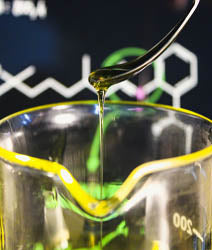
Physical Form: Transparent, pale yellow, high viscous liquid, distinct odor
Solubility: Water, Alcohol, Glycol
Country of Origin: China
Storage: Keep capped in an air tight container. Cool dry place away from light.
Best Used By: Two years from date of purchase.
Shelf Life Once Used in Manufacturing: One year from manufacturing date.
| California Prop 65 Statement: | This product is not on the CA Prop 65 list of toxic chemicals. This product conforms to the reporting requirements of California Proposition 65 (Safe Drinking Water and Toxic Enforcement Act of 1986). We are conforming to the regulation by reporting the existence, or lack thereof, of ingredients deemed reportable by the above mentioned regulations via a Safety Data Sheet (SDS), in Section 15 "Regulatory Information." Ingredients from Natural Food Sources (NFS) and are exempt from reporting in accordance with Title 27, § 25501(a). |
Authentication
Authentication is the determination of the correct species, origin and quality of herbs. The authentication process aims to prevent the use of inauthentic herbs, whether by mistaken identification or the substitution of imitation products.
The authentication method is modeled not only after the foundation books of TCM, but also in accordance with each country’s particular standards for quality and inspection methods. The authentication method also uses technology specified for detection of the correct origin and species of the herbs.
The following methods of authentication on raw herbs:
1.Appearance
2.Microscopic analysis
3.Physical/chemical identification
4.Chemical Fingerprinting
Techniques of Thin-layer chromatography (TLC), High-performance liquid chromatography-mass spectrometry (HPLC-MS), and Gas chromatography-mass spectrometry/mass spectrometry (GC-MS/MS) to authenticate the species identity of herbs.
Sulfur Dioxide Detection
Actions to prevent sulfur fumigation from being applied to its raw herbs. Many precautions to keep sulfur fumigation from the herbs, because it can jeopardize the quality and safety of the herbal products.
The quality control teams analyze herbs for sulfur dioxide and employs the following methods: aerated-oxidization, iodine titration, atomic absorption spectroscopy and direct color comparison. The Rankine method for sulfur dioxide residue analysis is used. In this method, the herbal sample is reacted with acid and then distilled. The sulfur dioxide is absorbed into the oxidized Hydrogen Peroxide (H2O2). The resultant sulfuric base is titrated with a standard base. The resulting colors determine the sulfur content: olive green indicates no oxidized sulfur residue while a purplish-red color indicates a presence of oxidized sulfuric acid.
Pesticide Residuals Detection
Chemical pesticides are generally classified into organochlorine, organophosphate, carbamate and pyrethin. Of these, organochlorine pesticides have the longest history of use, are most potent in effectiveness, and are also the most harmful to human health. Although many organochlorine pesticides are already forbidden by law, their persistent nature resists being broken down and can remain in the environment long after use. A comprehensive approach to testing for pesticides is exercised.
The labs test not just for the chemical compounds in the pesticide itself, but also test for the by-product chemical compounds. Pesticide analysis must anticipate all potentially harmful chemical changes produced in the plant to be truly effective. The techniques generally employed to detect pesticide residuals are thin-layer chromatography (TLC) or gas chromatography. TLC is used in most general cases because it is simple and easy to execute. Yet KP insists on using gas chromatography because of its high sensitivity, precision, and more reliable results.
Aflatoxin Detection
Aspergillus flavus is a fungus that occurs in pesticides, soil, corn, peanuts, hay and animal organs. Aspergillus flavus has also been found in herbs such as corydalis (yan hu suo), cyperus (xiang fu) and jujube (da zao). It thrives especially in warm temperatures of 77–86°F, a relative humidity above 75% and a pH level above 5.6. The fungus can actually grow in temperatures as low as 54° but will not be toxic.
Strict international regulation standards are enforced. Aflatoxin testing is performed on all herbs at risk of contamination. High-quality premium herbs are valued, and herbs that contain unacceptable Aflatoxin levels are discarded. These strict standards keep herbs safe and efficacious for consumers.
Heavy Metal Detection
Inductively coupled plasma mass spectrometry (ICP-MS) is used to detect for the five heavy metals that pose the most serious risk toward human health: lead, copper, cadmium, arsenic and mercury. In excessive quantities each of these heavy metals endangers health in different ways.
.International Nomenclature of Cosmetic Ingredients (INCI):
Polyglyceryl-4 Caprate
Common Name Ingredient Listing (FDA Approved):
Polyglyceryl-4 Caprate
CAS# 160391-93-5
TERMS
**Bulk Size Shipping - Averages 7-10 Business Days.
**Bulk Shipping not included when ordering. You will be billed.
This information is for general research purposes only and is not a representation or warranty of any kind. This material is not intended to diagnose, treat, cure or prevent any disease. The user of this material is solely responsible for determining fitness for any particular use; requesting and reviewing the applicable Safety Data Sheet; and compliance with all applicable laws and regulations. Candle Cocoon's standard terms and conditions apply. Purchaser is responsible for testing of all products.
IFRA Information
IFRA Information
Fragrance Oil Notes
Fragrance Oil Notes
Scent Notes
T: Bright orange, balsam
M: Cuddled with jasmine, rose
B: Smooth vanilla
Materials and care
Materials and care
Merchandising tips
Merchandising tips
Share
K
Kenny Alvarez I’ve been using Polyglyceryl-4 Caprate from this store and I’m really happy with the quality of the product. It works great and has been exactly what I was looking for.
I did have an issue with one of the bottles I received, so I contacted their customer service. They responded very quickly, were extremely friendly and attentive, and made the whole process very easy.
What impressed me the most was how fast they resolved the problem—they sent a replacement the very next day. That level of support and care for their customers really stands out.
Excellent product and excellent customer service. I would definitely order from them again.
Thank you Kenny! And again so sorry for the mix up! Still not sure how it happened. But we did slow down a little and are making sure we only do one thing at a time!!! Best to you, Lyschel